Where to Look for the Red-Flanked Bluetail at Great Falls Park This Winter
November 26, 2026
November 26, 2026
On New Year's Day 2026, Fairfax County birder Phil Kenny photographed a small brown bird with orange patches on its sides at Great Falls Park. It was a red-flanked bluetail, a songbird from the other side of the world that had never been recorded in Virginia. His photos from that morning are archived in Cornell's Macaulay Library. Over the next several weeks, hundreds of birders from Florida to New York and farther came to the park to look for it, according to a Virginia Department of Wildlife Resources account by Virginia Master Naturalist Barbara Saffir.
Now it is back. On the park's volunteer bird count on November 15, 2026, a red-flanked bluetail was logged with photo evidence, "seen same location as last year; on the trail from the upper lot to the aqueduct." Three days later, The Washington Post reported that the bird had shown up again at the same park where it was found 10 months earlier.
Last winter, people drove across several states to see this bird. If you live in Great Falls, it is a short drive from home, and you can go back as many times as it takes to find it.
The red-flanked bluetail usually winters in Japan, Korea, southern China, Thailand and Myanmar. It breeds across Japan, Siberia and Finland. In its January 9, 2026 Rare Bird Alert, the American Birding Association called the Great Falls bird a Virginia state first and a Code 4 rarity. The species is somewhat regular in western Alaska, but this was only the second record in eastern North America. The first was a New Jersey bird at the end of 2023.
The ABA post raised the possibility that the New Jersey bird and the Virginia bird were the same one, coming back to roughly the same part of the continent. It called that the less likely explanation, judging it more probable that the species wanders far off course more often than birders notice in the East. A return to the same Great Falls trail this November is what makes this winter different. Last year it was a one-time chance. This year, the bird has come back to a spot people already know.
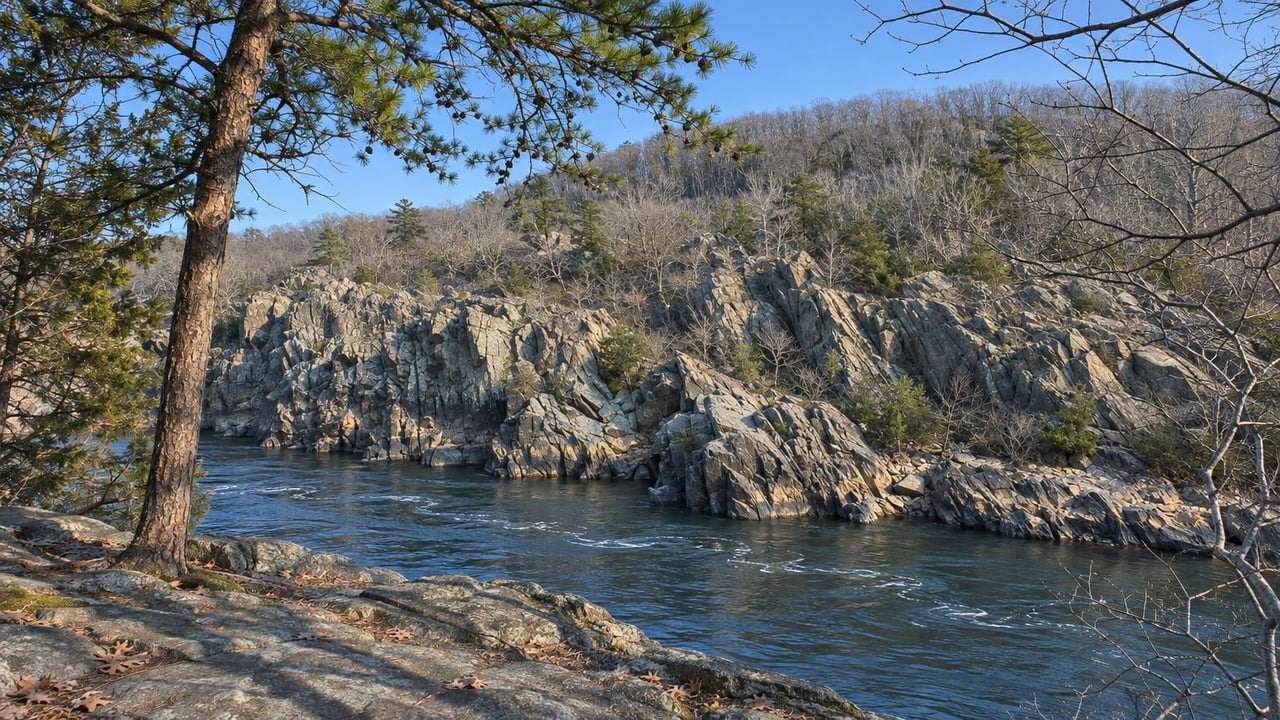
The bird has stayed in a small area both winters. Saffir described its territory as a narrow strip of land about 2/10 of a mile long, between the Potomac and a granite cliff. She wrote that the bird moves back and forth from the river to the ridge and drops to the forest floor to look for insects under wet leaves. The November 15 count puts it in the same terrain: on the trail from the upper lot to the aqueduct, moving between the path beside the steep hillside and a lower area near the river.
Its food also comes from a long way off. Saffir reported that last winter it fed on red wintercreeper euonymus seeds and oriental bittersweet berries. Both plants are native to China, one of the places the species normally spends the winter, and both are considered invasive in the United States. She described the bird as about 5.5 inches long, like a smaller version of the eastern bluebird, light brown with orange patches on each side. It often disappears into tangles of vines and mossy boulders, and the easiest way to spot it is when it bobs its blue tail.
Experienced birders don't always find it. Saffir wrote that some people found the bird right away and others walked the trail for hours without seeing it. She saw it seven times over the winter, usually with other birders helping her look. That is the main advantage of living nearby. Someone who drove up from Florida had a day or two to find it. You can come back after an hour that didn't pan out and try again.
Great Falls Park opens daily at 7 a.m. and closes 30 minutes after sunset. It is closed on Christmas Day, as is the visitor center, which is otherwise open 10 a.m. to 5 p.m.
The NPS fees page lists a standard pass at $10 to $20 and a Great Falls annual pass at $35. The park doesn't accept cash. If you buy your pass online at recreation.gov, NPS asks that you download the QR code before you leave home because cell service in the park is limited. Physical passes are also sold on site. The park's conditions page warns that entrances may close temporarily when the parking lots fill. It also lists the Aid Box climbing area as closed after a rock fall. Last March, Saffir reported that even more people came to look for the bluetail after The Washington Post's March 8 story. With a second Post story already out this November, an early start is the more reliable way to get in.
The November 15 sighting came from a regular park program. A volunteer-guided bird walk meets every Sunday at 8 a.m. in the main parking lot. Beginners and experienced birders are both welcome. Minors need to come with a responsible adult, and dogs are not allowed on the walk. The walk is canceled when the park is closed, when the weather is extreme or when the park opens late, and weather updates are posted on the Great Falls Park Facebook page.
The November 15 list on the park's page also includes a bald eagle, two common mergansers, five American black ducks, 13 golden-crowned kinglets, 17 cedar waxwings, 12 eastern bluebirds and 30 white-throated sparrows. Those eastern bluebirds are useful for comparison, since Saffir described the bluetail as resembling a smaller version of one.
The park's bird page says more than 150 species can be seen at Great Falls over the course of a year. It also points out that black and turkey vultures are seen more often there than bald eagles. If you want better odds of seeing an eagle, go upriver.
Riverbend Park, run by the Fairfax County Park Authority, sits on the same river a short way upstream. According to the National Park Service's Riverbend wildlife page, if you start behind the Riverbend Visitor Center and turn left on the Potomac Heritage Trail, you reach a view of a bald eagle nest. Turning right takes you all the way to Great Falls Park. Both routes follow the river, where osprey, belted kingfishers and common mergansers can be seen. The two parks are connected by one riverside trail.
Riverbend also has guided winter programs. The county's Riverbend events calendar lists a Winter Bird Walk on Saturday, December 5, from 8 to 9 a.m., for ages 4 through adult. A naturalist leads the walk to look for winter residents and migrants and to talk about how birds survive the cold. That puts two guided bird walks on the same weekend: Riverbend on Saturday morning and the Great Falls Park walk on Sunday, December 6, at 8 a.m.
The rest of Riverbend's December calendar continues past the bird walk. To Build a Fire runs December 5 and January 2, both from 11 a.m. to noon. Penguins and Polar Bears, for ages 3 to 9, is December 6 from 10:30 to 11:30 a.m. The Winter Solstice Campfire on December 21, from 6 to 8 p.m., includes a naturalist-led hike, ornament crafting, warm drinks and a campfire, and a Full Moon Nature Hike and Campfire follows on December 23 from 6 to 7:30 p.m. Family Fun Fridays at the Nature Center run from noon to 5 p.m. on December 4 and 18, January 8 and 22, and February 5 and 19. Check fees and registration on the county calendar before you go.
No one knows how long the bird will stay this winter. Last March, Saffir noted that the New Jersey bluetail reportedly left around the end of March. She suggested the Great Falls bird might leave when the kinglets, hermit thrushes and white-throated sparrows that spend the winter with it head north to breed. Golden-crowned and ruby-crowned kinglets and 30 white-throated sparrows were all on the November 15 count, along with the bluetail itself.
If you'd rather go with a group the first time, the Saturday Riverbend walk and the Sunday Great Falls walk on December 5 and 6 are a good place to start. If you plan to look on your own, park at the upper lot, walk toward the aqueduct, and watch for a small bird bobbing a blue tail low between the river and the cliff.
Great Falls Park and Riverbend are a short drive from most of Great Falls, and a winter like this one is a good reminder of what's on the river. If you're thinking about a home near those trails, or about how to present your Great Falls property to buyers, Jo & Co can share what we're seeing in the Great Falls market. Let's Connect.
Stay up to date on the latest real estate trends.
November 26, 2026

November 19, 2026

November 12, 2026

November 5, 2026

October 29, 2026

October 22, 2026

October 15, 2026

October 8, 2026

October 1, 2026
Jennifer has an easygoing disposition, making those around her feel instantly comfortable. Professional and personable, Jennifer makes the home-buying or home-selling experience a pleasant one.