In McLean, The Old Rambler Can Cost More Per Square Foot Than The New Mansion
October 1, 2026
October 1, 2026
Five parcels along Chain Bridge Road and Pathfinder Lane in McLean recently came to market as a single package: 9,800 square feet of land, listed at $6.8 million, with zero bedrooms and zero bathrooms noted anywhere on the listing. There is nothing to walk through. The structures on those lots are not the product. The dirt is.
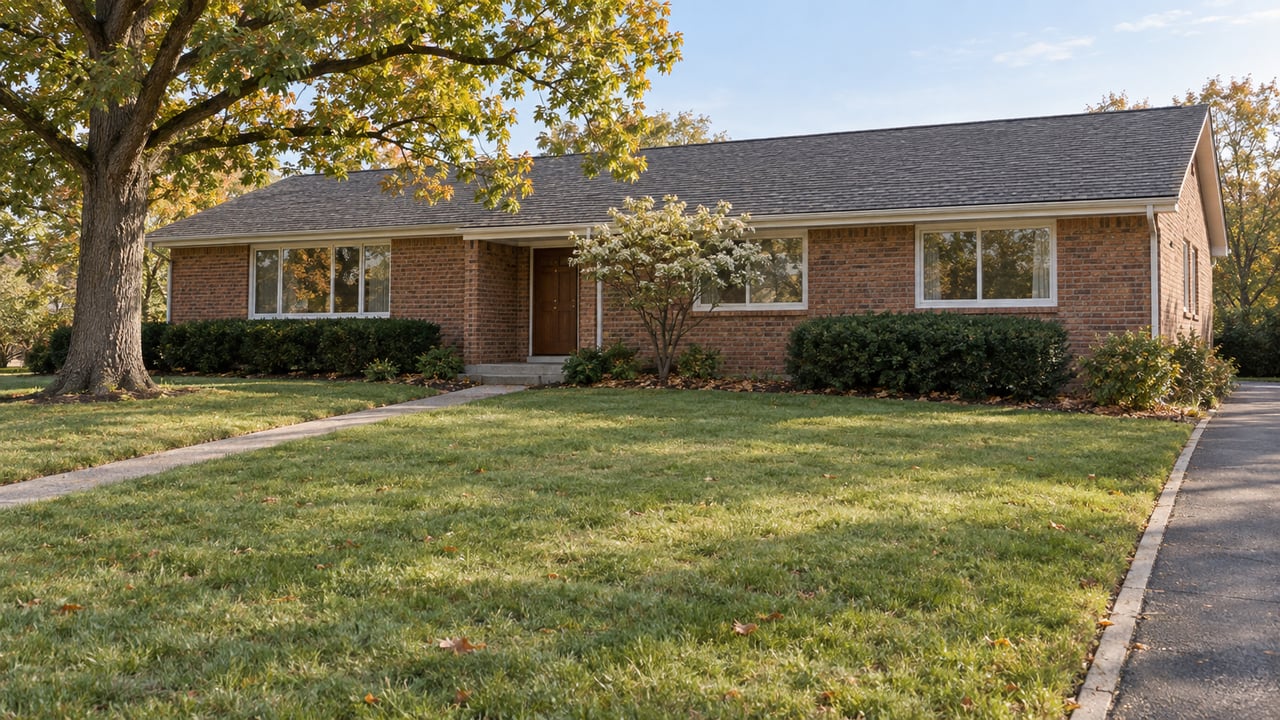
That listing is an extreme version of something that happens quietly across McLean every month, and it explains a pattern that trips up buyers who are comparing homes the normal way, by price per square foot. In parts of McLean, a small, dated rambler from the 1960s can sell for more per square foot than a brand new 8,000-square-foot custom estate two streets over. That is not a typo, and it is not the older home being nicer. It is the metric measuring the wrong thing.
Look at two recent sales in established McLean neighborhoods. A 1,980-square-foot home on Ironwood Drive in Chesterbrook Woods sold in February 2026 for $1,519,375, which works out to about $767 per square foot. A 1,688-square-foot home on Hardy Drive in Potomac Hills sold in June 2025 for $1,225,000, roughly $726 per square foot.
Now compare that to new construction across McLean as a whole. Active new-construction listings tracked in July 2026 carried an average asking price of about $607 per square foot, and recently completed new-construction sales averaged around $559 per square foot.
The smaller, older homes cost more per square foot than the larger, brand new ones. Once you know why, the market stops being confusing and starts being legible.
A demolition contractor working the McLean market put it plainly on their own site: buyers regularly purchase mid-century homes in neighborhoods like Salona Village, Chesterbrook, and Potomac Hills for lot value alone. The house comes down. A custom build going up to 11,000 square feet takes its place. In much of the McLean market, the land underneath the structure is worth more than the structure itself.
When that is true, price per square foot on the old home isn't describing the house at all. It's describing the lot, divided by whatever small footprint happens to be sitting on it. A $1.5 million lot with a 1,980-square-foot rambler on it produces a much higher per-foot number than the same lot would if a builder had already put an 8,000-square-foot house there. The rambler isn't expensive. The land is, and there's less square footage to spread that cost across.
Not every older McLean home is destined for demolition, and the decision usually comes down to a specific threshold rather than sentiment. Custom home builders working the area describe a teardown becoming the rational choice once projected renovation costs start approaching 70 percent of the home's replacement value. Below that line, updating the kitchen and mechanicals makes financial sense. Above it, you're paying most of the cost of a new house while keeping the old one's foundation, ceiling heights, and floor plan.
That threshold is why McLean's 1960s and 1970s housing stock keeps producing teardown candidates at a steady pace. Aging foundations, compartmentalized rooms, and mechanical systems built for a different era push renovation costs upward fast, and a lot that was worth $350,000 to $400,000 a few years ago can carry a very different number today once buyers start pricing it as a rebuild opportunity rather than a livable home.
A lot can look ready for a teardown and still not be one, and this is where a lot of confident math falls apart. Fairfax County draws a real distinction between a lot being valid and a lot being buildable. Meeting minimum yard requirements, floodplain restrictions, and Chesapeake Bay Preservation Area rules is a separate question from simply owning the land.
A few specifics matter more than they might seem to at first glance. Lots created before March 1, 1941 are automatically considered valid under county rules, while later lots may or may not qualify depending on county mapping and structure history. Resource Protection Areas, which cover land near streams and the Potomac, generally prohibit development and vegetation removal without prior approval. And if a project disturbs more than 2,500 square feet of land, Fairfax County requires a separate permit before work begins.
None of this shows up in a listing photo. It shows up in a plat, a zoning file, and sometimes a conversation with the county's Land Development Services office before an offer ever gets written. Fairfax County's own real estate assessment records, which show sale history and physical characteristics for individual parcels, are a useful first stop for anyone trying to separate a real teardown opportunity from a lot that only looks like one.
There are practical costs to plan for on top of the land itself. A full house demolition in the McLean market currently runs $9,400 to $19,800, and according to McLean Demolition, any structure built before 1980 requires an asbestos inspection, typically $300 to $600, before mechanical work can start. Permits for the demolition itself generally take two to three weeks to issue once utility disconnections are confirmed with the relevant providers.
| Comparison point | Older lot-value home | New construction |
|---|---|---|
| Example sale | 1,980 sq ft, Chesterbrook Woods, sold Feb. 2026, $1,519,375 | McLean new-construction average, July 2026 |
| Price per sq ft | About $767 | About $607 (active listings) |
| What's actually being priced | The land, divided by a small existing footprint | Finished square footage, systems, and design |
The gap in that table isn't a market inefficiency waiting to be arbitraged. It's two different products being measured with the same yardstick. A buyer evaluating an older McLean home needs to ask whether the number they're looking at describes a house they'll live in or a lot they'll rebuild on, because the answer changes what counts as a fair price entirely.
This matters most for two kinds of buyers. Someone comparing McLean to a similarly priced home in Great Falls or Vienna needs to know whether the McLean comp they're looking at is selling finished living space or raw land wearing a house. And a seller holding one of McLean's older homes in Salona Village, Chesterbrook Woods, Potomac Hills, or McLean Hamlet needs an honest answer about whether the property is worth more marketed as a move-in home or as a rebuild opportunity, because those are different listings aimed at different buyers with different financing and different timelines.
Does an older McLean home automatically qualify as a teardown? No. A lot can be legally valid and still fail to meet the setback, floodplain, or Resource Protection Area rules that make it buildable at the scale a buyer has in mind. Confirming zoning district and reviewing the plat or a house location survey before making an offer is worth the time it takes.
If the land is worth more than the house, why not just price the listing as land? Some sellers do exactly that, which is what makes the Chain Bridge Road and Pathfinder Lane assemblage worth noting. Listing five contiguous parcels together at $6.8 million with no bedroom or bathroom count acknowledges directly that the buyer is purchasing land, not a home.
Whether a specific property in McLean is worth more standing or worth more as a rebuild site depends on the lot, the zoning file, and the comparable sales around it rather than on the square footage sign in the yard. Jo & Co works through that comparison with buyers and sellers across McLean's older neighborhoods before an offer gets written or a listing gets priced. Let's Connect to talk through what a specific McLean address is actually worth.
This article is general information, not legal, tax or financial advice. Consult a qualified professional about your situation.
Stay up to date on the latest real estate trends.
October 22, 2026
October 15, 2026
October 8, 2026
October 1, 2026
September 24, 2026
September 17, 2026

September 10, 2026
September 3, 2026
August 27, 2026
Jennifer has an easygoing disposition, making those around her feel instantly comfortable. Professional and personable, Jennifer makes the home-buying or home-selling experience a pleasant one.