Falls Church City's Tax Rate Keeps Falling. Here's What's Funding the Cut.
September 3, 2026
September 3, 2026
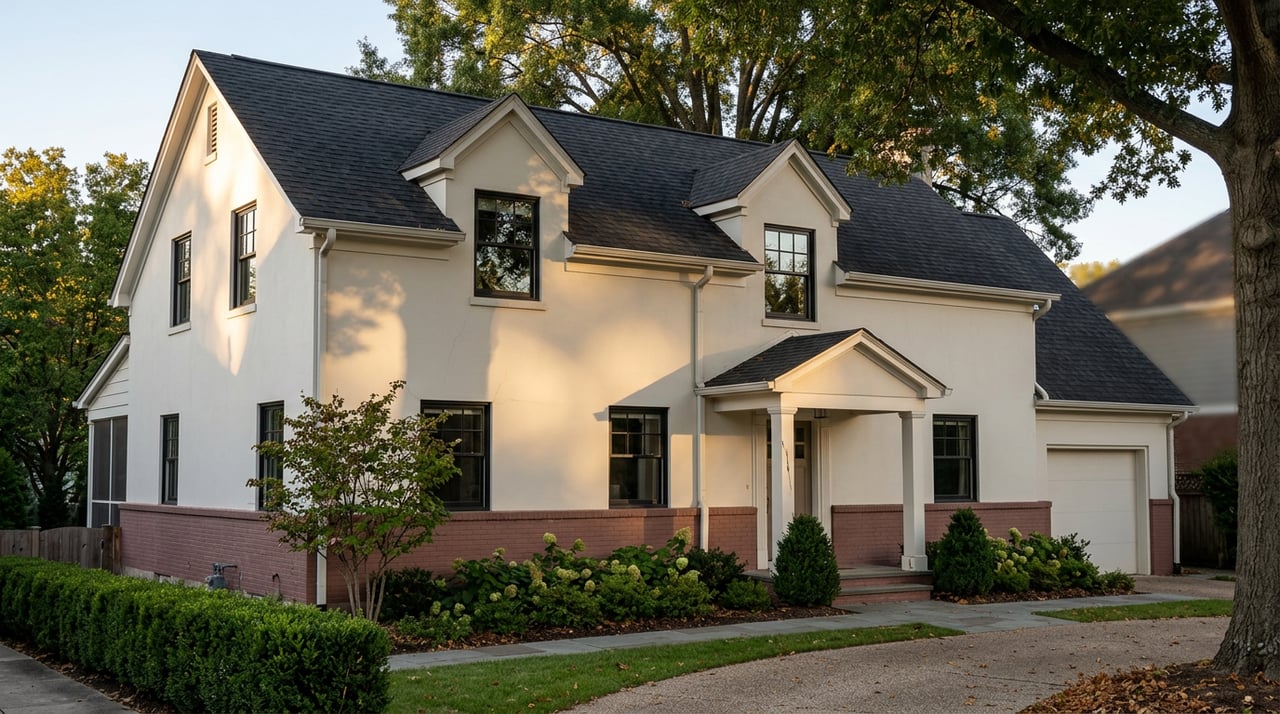
In April 2026, the Falls Church City Council voted 7-0 to advertise a real estate tax rate with no increase for the coming fiscal year, the ceiling state law allowed them to set before final budget adoption. Mayor Letty Hardi went further, floating a one-cent cut on top of that, framing it as a way to help the city "distinguish Falls Church from the region" at a moment when Arlington and Fairfax County were both under real fiscal pressure. For anyone comparing homes across the Falls Church line, that is the kind of line that gets circled. Rising values, a falling rate, a mayor happy to say so out loud. It reads like the rare local trend that gets better every year it continues.
It is real. It is also younger and more conditional than it looks. The rate has come down because a decade of dense redevelopment has finally started landing on the city's tax rolls, and the city is now running its budget partly on that new base. Its own fiscal reporting shows that base is still catching up to the projections that justified building it. Before treating a falling tax rate as a settled fact about Falls Church City, it helps to understand which Falls Church you're pricing, and what, exactly, is paying for the cut.
The independent City of Falls Church covers about 2.2 square miles and carries its own government, its own school system, and its own real estate tax rate, all separate from Fairfax County. Its zip code is 22046. Just outside that line, in Fairfax County, sit neighborhoods that share the Falls Church name on an envelope but not the jurisdiction: Pimmit Hills, Sleepy Hollow, Seven Corners, Holmes Run. Those addresses fall under Fairfax County's tax structure and school assignment, not the city's, even though a listing might read "Falls Church, VA" in both cases.
This distinction matters before a single tax figure enters the conversation, because homes inside the independent city commonly carry a premium over comparable homes just across the boundary, one widely cited in local market commentary as somewhere in the 10 to 20 percent range. Part of that premium reflects access to the city's own K-12 system. Part of it reflects the tax and budget picture this piece is about. A buyer who assumes every "Falls Church" listing sits inside the same fiscal system is comparing two different governments without realizing it.
Start with what actually happened. The city's real estate assessments, as of January 1, 2026, put the total taxable value of property in Falls Church at just over $6.86 billion, up 6.9 percent from a year earlier, with market appreciation accounting for most of that and new construction adding the rest. Against that growth, the City Council still managed to cut the rate. The adopted FY2026 budget brought the real estate tax rate down from $1.21 to $1.20 per $100 of assessed value, a one-cent reduction that, citywide, is worth roughly $630,000 in revenue.
That one cent is not nothing, but it is worth sitting with what it did and did not do for an individual homeowner. Because assessments rose faster than the rate fell, the median home's tax bill still grew by an estimated $553, or 4.7 percent, in the same year the rate went down. A falling rate and a rising bill are not a contradiction. They are two sides of the same math, and a buyer comparing this year's rate to a prior year's rate without checking assessed value growth is only getting half the picture.
The April 2026 vote to hold the FY2027 rate flat, with the mayor pushing for another cut, continues that pattern. Worth knowing here: city staff calculated that an "equalized" rate of $1.125 would have generated the same total tax levy as the prior year, given how much assessments had already grown. A rate cut against that backdrop isn't purely a gift to homeowners. It's partly just arithmetic catching up to the fact that home values did the heavy lifting first.
The other half of the story is where the new tax base is coming from, and this is where the city's own numbers get more cautious than the headline suggests. Over the past two decades, Falls Church has approved a run of mixed-use redevelopment along West Broad Street: Founders Row, its second phase now known as Modera Falls Church, the Broad and Washington project anchored by Whole Foods, and West Falls near the West Falls Church Metro station. On paper, these projects convert underused parcels, a vacant motel, an old Rite Aid and carpet store, a surface lot, into new residential density and new commercial tax revenue that didn't exist before.
The problem is timing. Several of these projects have taken years longer to start generating revenue than their approval timelines implied.
The aggregate numbers tell the same story at scale. Across the first eight mixed-use projects completed in the city between 2004 and 2016, real estate assessments grew 16 percent from 2020 to 2024, reaching $660 million. But gross tax revenue from those same projects grew far more modestly over that period, from $10.8 million to $11.5 million, and one of them, Northgate, actually saw its assessment decline. Founders Row I alone added $3.4 million in gross tax revenue in 2024, the year it finally opened, which is a real number and a useful one, but it also shows how much of the promised revenue was still sitting on the come as recently as two years ago.
None of this means the redevelopment strategy has failed. It means it's still resolving, and the city's own budget documents say so plainly. Guidance for the FY2026 budget projected 5.5 to 6.0 percent overall revenue growth, with about half of the new tax revenue coming from new construction, and still forecast a $2 million gap between anticipated revenue and anticipated spending on city and school operations. The adopted FY2026 budget included specific contingency funds, one to cover potential tax revenue shortfalls, another to cushion against a weaker economic picture, citing a University of Virginia forecast that Virginia's unemployment rate could climb toward 4.7 percent in 2026 as federal workforce reductions worked through the regional economy.
A council that is simultaneously cutting the tax rate and setting aside money in case revenue underperforms is not describing a locked-in trend. It's describing a bet that is still being tested, one where the redevelopment pipeline needs to keep leasing up on schedule for the rate trajectory to hold.
For a buyer weighing a home inside the city against one a few blocks away in Pimmit Hills or Sleepy Hollow, or against a different Northern Virginia jurisdiction entirely, a few things follow from all this.
First, confirm the actual jurisdiction of a specific address before comparing its tax history to anything else. A "Falls Church" mailing address alone doesn't tell you which tax rate, which school system, or which government applies. Second, ask for the assessment history on the specific parcel, not a citywide average, since assessment growth (not just the posted rate) is what will determine an actual tax bill from one year to the next. Third, treat the current rate trend as a snapshot tied to an ongoing redevelopment cycle, not a permanent structural feature of living in the city. Projects still in the pipeline, including a possible large-scale redevelopment of the Virginia Village community and a stalled expansion proposal near George Mason Square, will shape whether this trend continues or corrects.
None of this is a reason to avoid the city. It's a reason to price the trend accurately rather than assuming it repeats itself automatically.
Does a Falls Church mailing address mean the home is inside the City of Falls Church? Not necessarily. Zip code 22046 is inside the independent city. Zip codes 22041, 22042, 22043, and 22044 carry a Falls Church mailing address but sit in Fairfax County, under a different tax rate, government, and school assignment. Always verify jurisdiction against the specific parcel before comparing tax bills or school assignments across listings.
Will the tax rate keep falling? Recent history says the council is inclined to hold the rate flat or cut it further when assessment growth allows, and officials have said as much publicly. But the city's own fiscal reporting on its redevelopment projects shows commercial revenue arriving later than originally planned, and the FY2026 budget built in contingency funds specifically because that revenue picture wasn't fully resolved. Read a rate cut as good news tied to a trend still in motion, not a number that's finished changing.
If you're comparing a home inside Falls Church City to one just outside it, or trying to understand what a specific parcel's tax history actually shows, that's exactly the kind of question worth working through with someone who tracks this market closely rather than skimming a listing sheet. Jo & Co can walk through the assessment and jurisdiction details on any address you're considering. Let's Connect.
Stay up to date on the latest real estate trends.
September 24, 2026
September 17, 2026

September 10, 2026
September 3, 2026
August 27, 2026
August 20, 2026
August 13, 2026
August 6, 2026
August 6, 2026
Jennifer has an easygoing disposition, making those around her feel instantly comfortable. Professional and personable, Jennifer makes the home-buying or home-selling experience a pleasant one.