Arlington VA Walkable Living: Which Area Fits You?
June 11, 2026
June 11, 2026
If you picture walkable living in Arlington as a perfect car-free fantasy, the reality is a little more nuanced and a lot more useful. Arlington is built to make everyday life easier on foot, by trail, and by transit, but your experience depends a lot on which part of the county you choose. If you are trying to figure out whether Arlington’s walkability fits your lifestyle, this guide will help you understand what daily life really looks like and where each walkable area has its own rhythm. Let’s dive in.
Arlington’s walkability is not an accident. The county has spent years concentrating growth in 12 urban villages and along major corridors near public transportation, rather than relying on one traditional downtown.
The Rosslyn-Ballston corridor is the clearest example of that approach. Arlington says this corridor created seven mixed-use, walkable, bicycle-friendly Metro transit villages designed to reduce dependence on cars while connecting residents to jobs, parks, shops, services, and other daily needs.
That larger planning model matters when you are choosing where to live. In Arlington, “walkable” usually means your home is part of a bigger system that blends housing, transit, retail, open space, and public infrastructure in a compact area.
For most people, walkable living in Arlington means car-light, not always fully car-free. The county’s transportation network includes ART bus, Metrorail, Metrobus, MetroAccess, VRE, biking resources, walking infrastructure, and commuter services, all designed to make it easier to get around without relying on a personal car.
In practical terms, your day may look simple. You might walk to Metro or an ART bus, pick up errands in a nearby retail cluster, meet friends for dinner, and head to a park or trail in the evening without getting in the car.
That said, many residents still keep a car for convenience. Arlington’s own transit and car-sharing policies support a lifestyle where driving is optional for many trips, but still useful for some.
A walkable lifestyle only works when the infrastructure is there. Arlington earned Walk Friendly Communities Platinum status in 2022, and county materials point to 527 miles of sidewalks, more than 50 miles of paved multi-use trails, and 14.5 miles of hiking and natural trails.
Green space is also part of the picture. In 2025, Arlington said 99% of residents live within a 10-minute walk of a park with public access.
That is a big reason Arlington feels livable rather than just dense. Walkability here is not only about getting from your building to a coffee shop. It is also about being able to walk to a park, a trail, a workout, or a place to unwind.
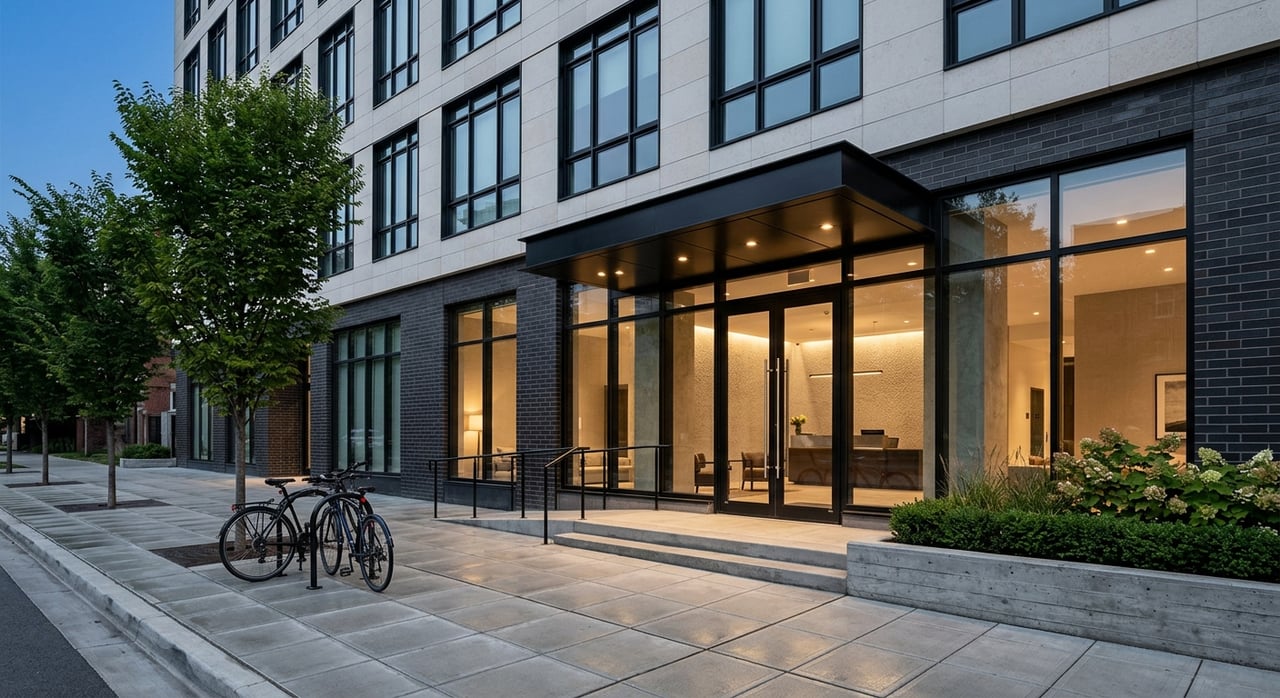
If you want the most vertical, city-like version of walkable Arlington, Rosslyn is the standout. The county describes Rosslyn as the gateway to Arlington, with more than 6,000 residences within a 10-minute walk of Metro.
Rosslyn mixes high-rise apartments and condos with older smaller buildings, newer townhouses, urban parks, and a wide range of restaurants. The result is a fast-paced, highly connected environment where the built form feels more urban than residential village.
For some buyers, that convenience is the appeal. For others, the density can feel intense, so it helps to know whether you want that energy every day.
The Rosslyn-Ballston corridor is where many buyers picture classic Arlington walkability. These neighborhoods offer a strong mix of Metro access, local businesses, residential buildings, and public spaces that make daily errands and social plans easier without much planning.
Arlington describes Clarendon as a walkable neighborhood with businesses, local shops, restaurants, bars, office buildings, public art, open space, and tree-lined streets. Around the Metro station, you will find a mix of single-family homes, apartments, condos, office buildings, and both local and national retailers.
Clarendon tends to appeal to people who want activity close at hand. You can step out for coffee, dinner, errands, or Metro access and feel connected to a full neighborhood rather than a single-use district.
Courthouse centers around a plaza and promenade that tie together government buildings, private offices, retail, theaters, and large residential communities near the Metro station. That mix creates a neighborhood where daily life feels organized around a central spine.
For buyers, Courthouse often feels practical and connected. It offers walkability with an urban structure that can feel a little more measured than some of the busier nearby areas.
Ballston is one of Arlington’s major transportation hubs. The county describes it as a place with office and residential buildings, hotels, shops, restaurants, and attractive open spaces.
If your routine involves commuting, dining out, and staying active, Ballston can check a lot of boxes. It tends to offer a strong blend of convenience and activity, with a layout that supports a fast-moving daily schedule.
Virginia Square brings together residential communities, arts, businesses, education uses, and expansive parks within blocks of Metro. Arlington highlights the main library, the Museum of Contemporary Art Arlington, and a George Mason University campus in this area.
That gives Virginia Square a different feel from some of the other corridor neighborhoods. It is still walkable, but the atmosphere includes more civic and cultural destinations woven into everyday life.
In Arlington’s National Landing area, walkability takes on a different character. Crystal City is described by the county as a place with shops, hotels, office and residential buildings, Restaurant Row on 23rd Street South, and easy walking access to the Crystal City Metro station.
County planning also frames Crystal City as an area being reshaped into a more vibrant, walkable, transit-oriented district with more housing options and improved public spaces. That means buyers may find a more evolving, large-scale urban environment here.
Pentagon City is described as a dining and shopping destination with a variety of housing types, plus Virginia Highlands Park and walkable access to the Metro station. Together, these areas can feel highly convenient, especially if you want a polished urban setting with strong transit connections.
Walkability in Arlington is not only about being next to a rail station. Some of the county’s most interesting walkable areas rely more on pedestrian design, bus access, and neighborhood-scale retail.
Shirlington is built around a pedestrian promenade with cafes, restaurants, shops, parks, a dog park, a cinema, the public library, and bus access. It also connects to trails along Four Mile Run.
This gives Shirlington a village-like feel that many buyers appreciate. If you like the idea of walking to dinner, the library, green space, and daily basics in a compact setting, Shirlington has a distinct personality.
Columbia Pike is Arlington’s long-running main-street corridor. The county highlights local shops, culturally diverse restaurants, and ongoing efforts to widen sidewalks, improve crossings, and make the corridor more walkable and transit-friendly.
That makes Columbia Pike a different kind of walkable environment. It is less about a single Metro-centered node and more about a corridor that continues to evolve around street-level activity and better pedestrian access.
One of the biggest advantages of walkable living in Arlington is that recreation is built into the routine. The county’s trail system includes nearly 49 miles of paved multi-use trails, along with connections to major regional routes like the Mount Vernon Trail, Custis Trail, Four Mile Run Trail, and W&OD Trail.
Destination parks and facilities also strengthen the lifestyle. County materials highlight places like Long Bridge Park, Virginia Highlands Park, Rosslyn Highlands Park, and Long Bridge Aquatics & Fitness Center.
That means your day does not have to stop at work and errands. Depending on where you live, you may be able to fit in a walk, run, workout, or park visit without adding a big commute to your schedule.
Walkable Arlington is not one uniform product. Rosslyn and Crystal City tend to feel more high-rise and office-oriented, Clarendon and Ballston feel like classic mixed-use Metro villages, Virginia Square adds cultural and educational uses, Shirlington feels more like a pedestrian village, and Columbia Pike offers an evolving main-street setting.
That variety is important when you are comparing homes. Two properties may both be in “walkable Arlington,” but the day-to-day experience can be very different.
There are also practical trade-offs to think through. More convenience often comes with more density, less private outdoor space, and, for condo buyers, possible fee and parking considerations.
The best way to think about walkability in Arlington is to match the neighborhood to your routine. If you want quick Metro access and a true urban feel, Rosslyn, Ballston, Clarendon, Courthouse, or Virginia Square may be the most natural fit.
If you want a polished, large-scale district with strong transit and retail, Crystal City or Pentagon City may stand out. If you prefer a more neighborhood-style pedestrian environment, Shirlington or parts of Columbia Pike may feel more comfortable.
When you are touring homes, pay attention to more than distance on a map. Look at how the neighborhood actually works for your errands, commute, green space, and the pace of life you want.
If you are weighing Arlington neighborhoods and want clear, local guidance tailored to how you actually live, Jennifer Jo brings a concierge approach, neighborhood insight, and meticulous transaction guidance to help you buy with confidence.
Stay up to date on the latest real estate trends.
October 15, 2026
October 8, 2026
October 1, 2026
September 24, 2026
September 17, 2026

September 10, 2026
September 3, 2026
August 27, 2026
August 20, 2026
Jennifer has an easygoing disposition, making those around her feel instantly comfortable. Professional and personable, Jennifer makes the home-buying or home-selling experience a pleasant one.