Reston Planned Community Home Search for Daily Life
May 28, 2026
May 28, 2026
If you search in Reston the same way you would search in a typical suburb, you may miss what really makes one home feel right and another feel inconvenient. In Reston, your decision is often about more than bedrooms, lot size, or price. It is also about village centers, trails, lakes, transit, and association structure. If you understand how Reston was planned, you can search more strategically and choose a home that fits your day-to-day life. Let’s dive in.
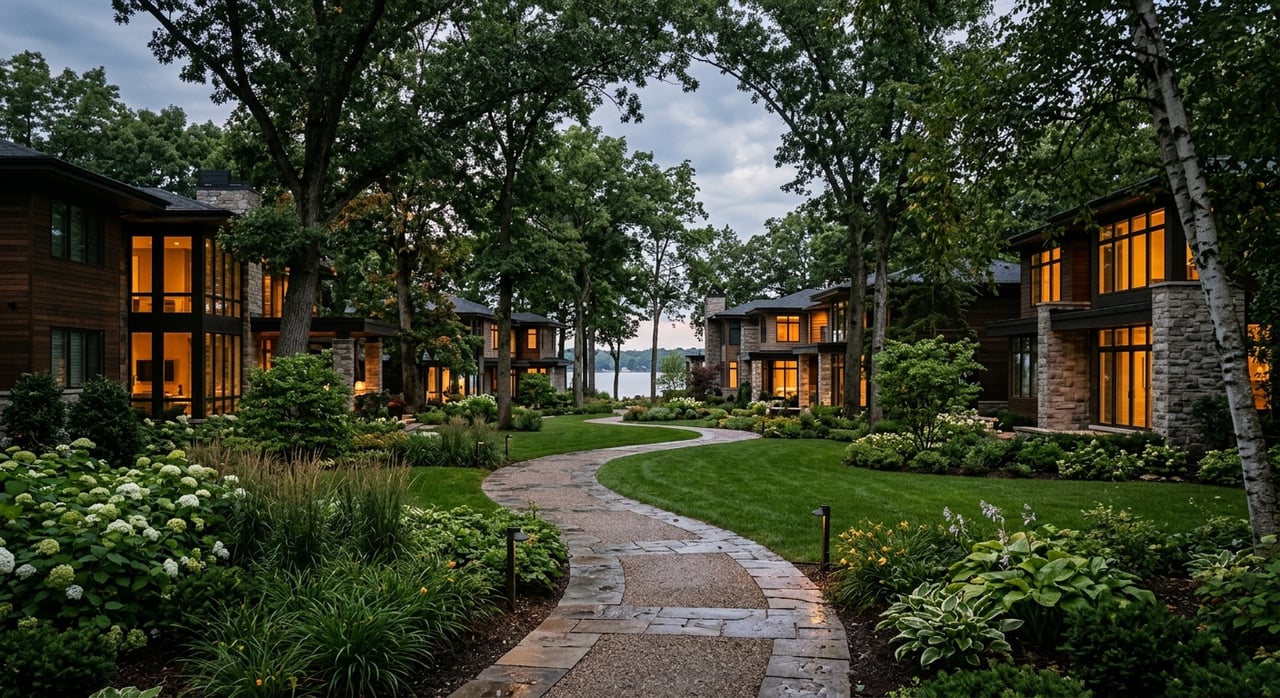
Reston was conceived as a planned community built around village centers and greenbelts. Fairfax County describes the original concept as residences, offices, and retail arranged around lakes and plazas at a pedestrian scale. That design still shapes how many buyers experience the community today.
The current Reston Comprehensive Plan continues to treat Lake Anne, Hunters Woods, South Lakes, and North Point as neighborhood-serving focal points. These centers are intended to include retail, restaurants, professional offices, and public gathering space. For you as a buyer, that means location within Reston is not just about a street address. It is about how close you want to be to one of those daily-use hubs.
A home near a village center can offer a very different routine from a home tucked deeper into a residential cluster. Fairfax County’s plan emphasizes pedestrian links, trail connectivity, and bus service around village centers. That makes proximity to a center a practical search filter, not just a nice extra.
Lake Anne is the clearest historic example of Reston’s original planning idea. Fairfax County notes that it was the first village center, opening in 1965, and remains a strong expression of the community’s pedestrian-scale design. If you are drawn to a more distinctive, place-driven setting, that matters.
The larger point is simple: two homes with similar square footage can live very differently depending on where they sit in Reston’s layout. One may put you close to trails, plazas, and everyday errands. Another may offer more separation from the commercial core while changing how you get around.
One of the smartest ways to search in Reston is to start with your routine. Think about where you want convenience and where you want separation. That often leads to a better decision than comparing homes only by finishes or price per square foot.
Ask yourself questions like these:
These tradeoffs are especially important in Reston because the community was intentionally organized around connected centers, open space, and transportation links. The right answer depends on how you actually live.
Reston Association maintains more than 55 miles of pathways and trails, more than 1,300 acres of open space, four man-made lakes covering 125 acres, 15 pools, and a 72-acre nature center. Those are not background amenities. They are a meaningful part of how many residents use the community.
Because of that, amenity adjacency matters more here than it does in many suburban markets. A home with a direct trail connection can feel more useful and convenient than one that is only a short drive away. If walking, jogging, or biking is part of your routine, that distinction is worth paying attention to early in your search.
The lakes also shape the feel of certain parts of Reston. Reston Association says they are used for fishing, boating, wildlife watching, and lakeside picnicking, but swimming is prohibited. So if you are drawn to a water-oriented setting, think in terms of views, trail access, and passive recreation rather than swim access.
Reston’s planned design also affects ownership in a practical way. Reston Association says it serves more than 60,000 people and over 22,000 residential units. Owners and renters subject to the Reston Deed are members, pay an annual assessment, and must follow covenants and association rules.
That is only part of the picture. Reston also has more than 160 sub-associations, which means many homes fall under a second layer of governance such as a cluster or condominium association. In real terms, you may be dealing with more than one set of rules and, in many cases, more than one set of dues.
This is one reason a Reston home search benefits from careful review beyond the listing details. A property may look similar on paper to another home nearby, but the association structure can affect costs, exterior changes, maintenance responsibilities, and the overall ownership experience.
Reston Association says it administers architectural and maintenance covenants through its board and Design Review Board. It also notes that design guidelines are meant to preserve the community’s aesthetic and architectural integrity. If you like the consistency of the community’s appearance, this may feel like a plus. If you expect to make visible exterior changes quickly, it is something to review closely.
Depending on the property, you may need to understand rules related to:
Road maintenance can also vary. Reston Association says VDOT handles most roads in Reston, but some roads are the responsibility of residential clusters. During due diligence, it is worth confirming who maintains nearby roads and how that may affect everyday access.
If you are making an offer on a Reston property, the disclosure package is especially important. Reston Association says Virginia law requires the RA resale disclosure packet when a property is sold. If the home is in a cluster or condominium, additional documents are required from that sub-association as well.
According to Reston Association, those documents can include assessment information, a community map, and notes on observed design or maintenance violations. This is not paperwork to skim. It can help you understand the real costs and obligations attached to a home before you move forward.
For many buyers, this is where local guidance matters most. A careful review can help you spot issues early, ask better questions, and compare homes more accurately.
Commute planning in Reston is also shaped by its design. The community has two Silver Line stations: Reston Town Center and Wiehle-Reston East. If Metro access matters to you, the part of Reston you choose can significantly affect your day-to-day routine.
WMATA describes Reston Town Center station as a short walk to dining, shopping, entertainment, the YMCA, the W&OD Trail, and nearby residential options. WMATA also notes that this station does not have commuter parking. That may work well if you want a walkable routine built around transit.
Wiehle-Reston East serves a different need. WMATA’s parking information shows that it offers multi-day parking for up to 10 days. If you expect to use park-and-ride options, that can be a meaningful advantage.
For relocators especially, the question is not just how far Reston is from Washington. The better question is which part of Reston best supports your actual commute pattern. A home near a station or village center may offer more daily convenience, while a home farther from those hubs may offer a different residential feel.
Neither choice is automatically better. The key is knowing your priorities before you start comparing listings. When you match your commute needs to Reston’s planned layout, your shortlist usually gets clearer fast.
Before you make an offer in Reston, try to answer these questions clearly:
These questions may sound detailed, but they can save you from choosing a home that looks right online and feels less practical once you own it.
Reston rewards buyers who search with context. The community’s planned design means your home choice is also a choice about connections, amenities, governance, and daily rhythm. If you only search by square footage and price, you may overlook the factors that shape your experience most.
A more effective approach is to match the village, trail, lake, transit, and association structure to your lifestyle. That is where a more confident decision usually comes from. If you want help narrowing the right part of Reston for your routine, commute, and ownership preferences, Jennifer Jo can help you search with clarity and confidence.
Stay up to date on the latest real estate trends.
October 15, 2026
October 8, 2026
October 1, 2026

September 24, 2026
September 17, 2026

September 10, 2026
September 3, 2026
August 27, 2026
August 20, 2026
Jennifer has an easygoing disposition, making those around her feel instantly comfortable. Professional and personable, Jennifer makes the home-buying or home-selling experience a pleasant one.